
Last updated September 20, 2026
Level 1 sweep and inspection to the NFPA 211 annual standard - flue, crown, cap, and flashing checked and photographed
Chimney sweep logs do not sweep chimneys. They loosen some creosote - which then falls where a brush and vacuum still have to collect it.
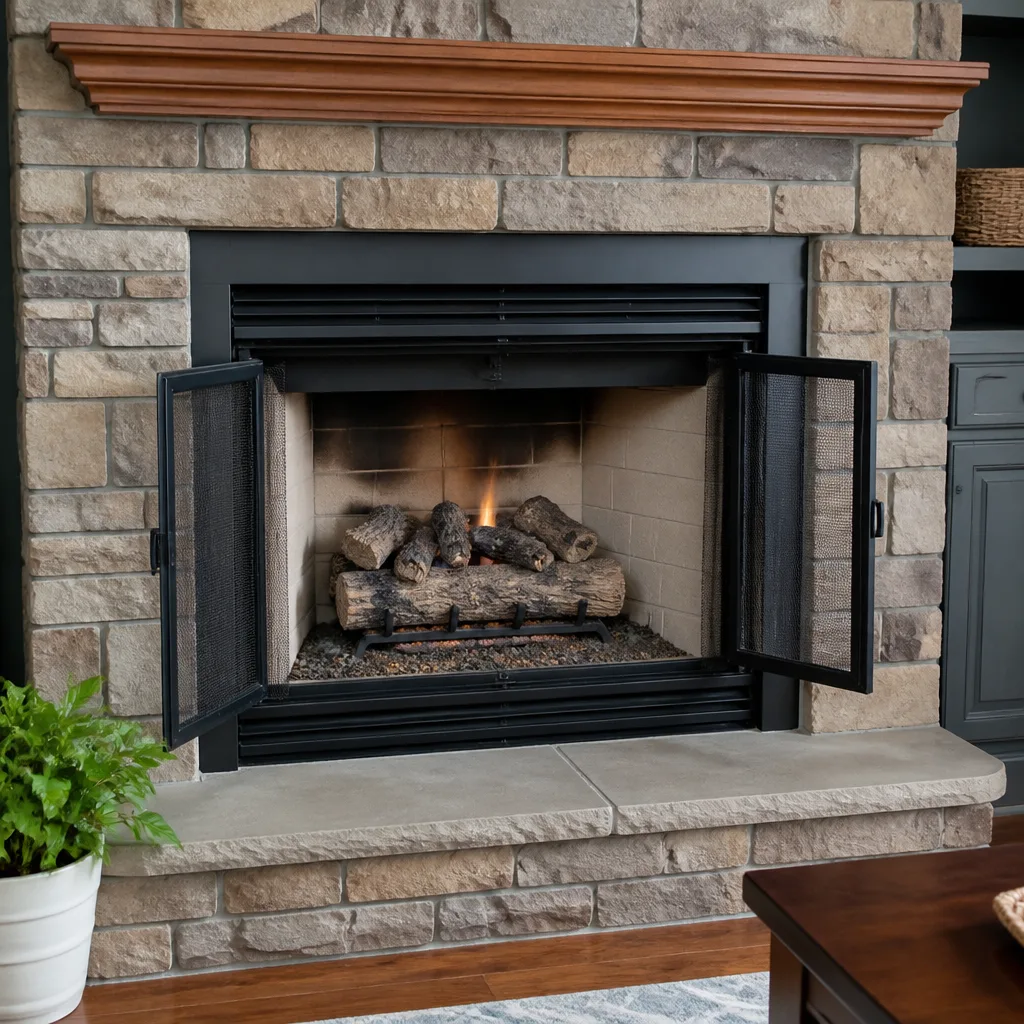
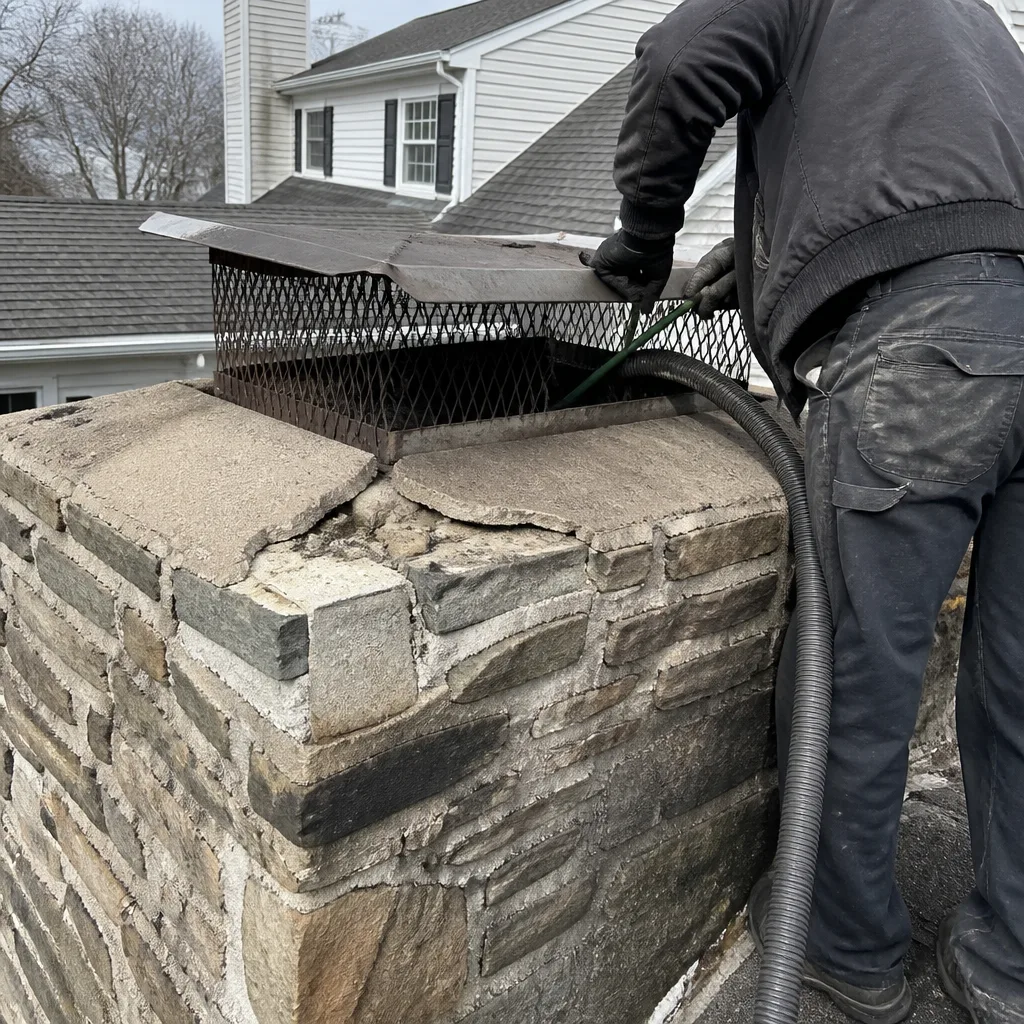 Before
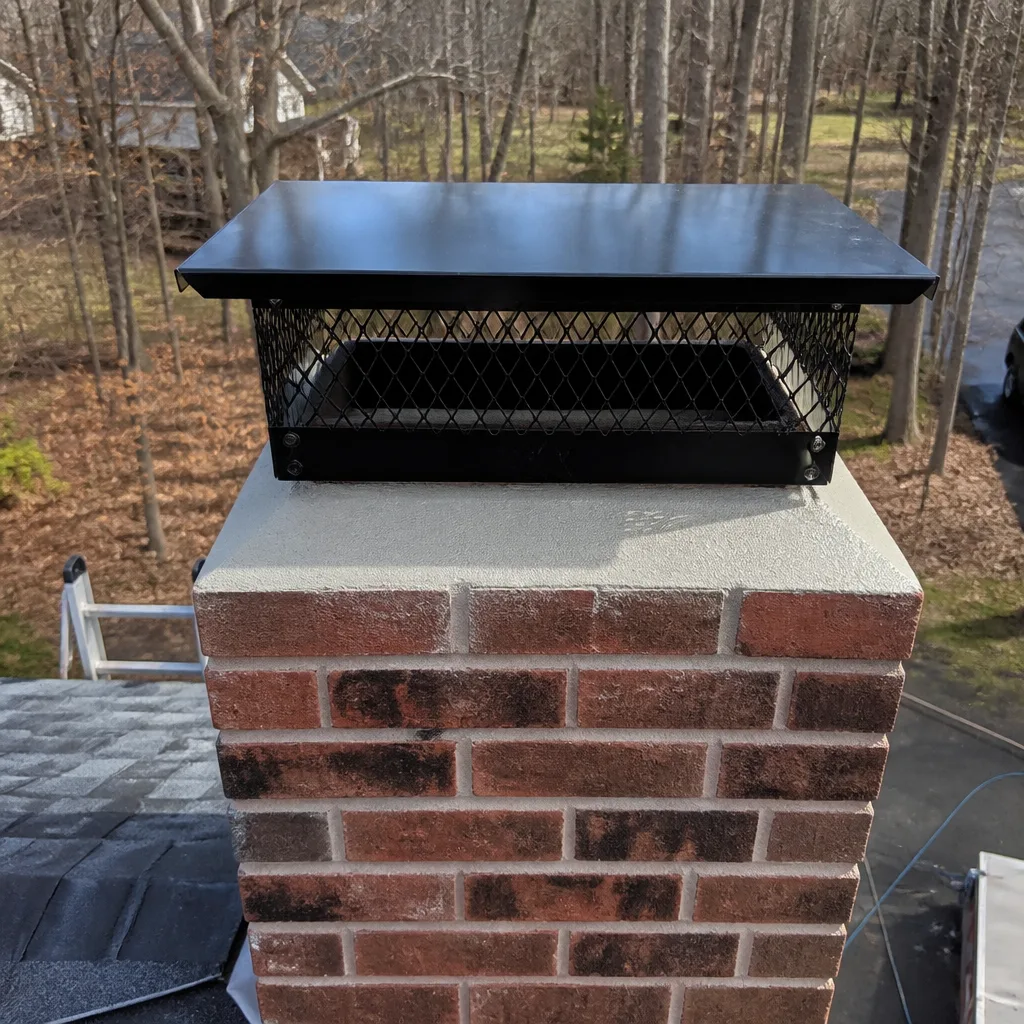 After
After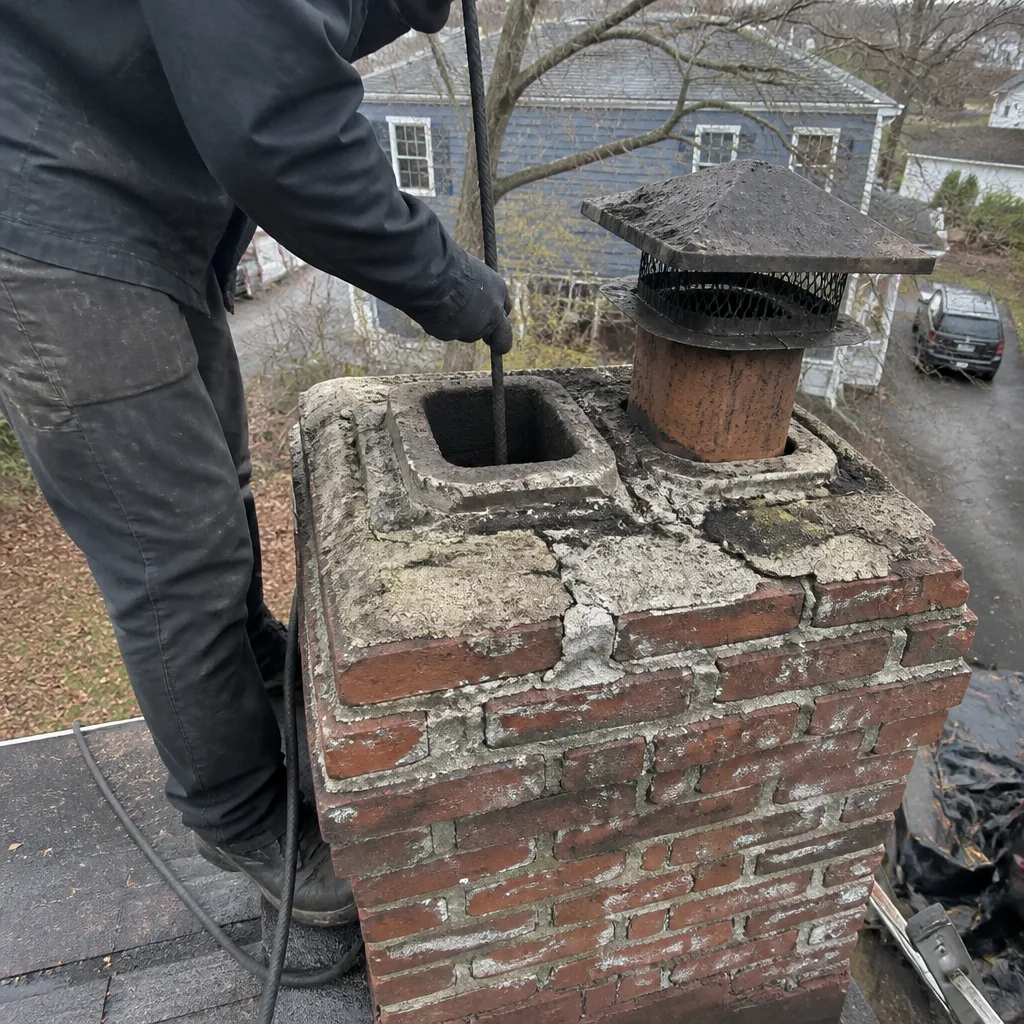 Before
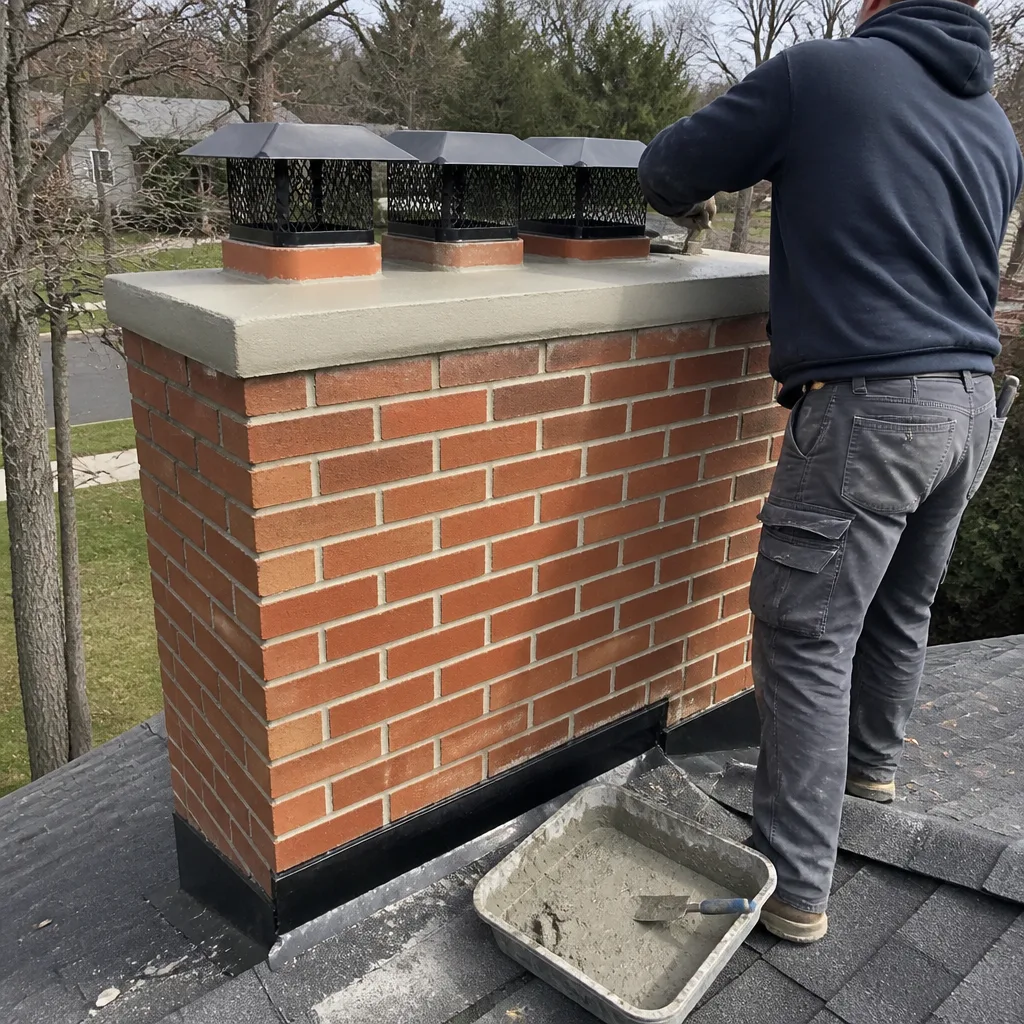 After
After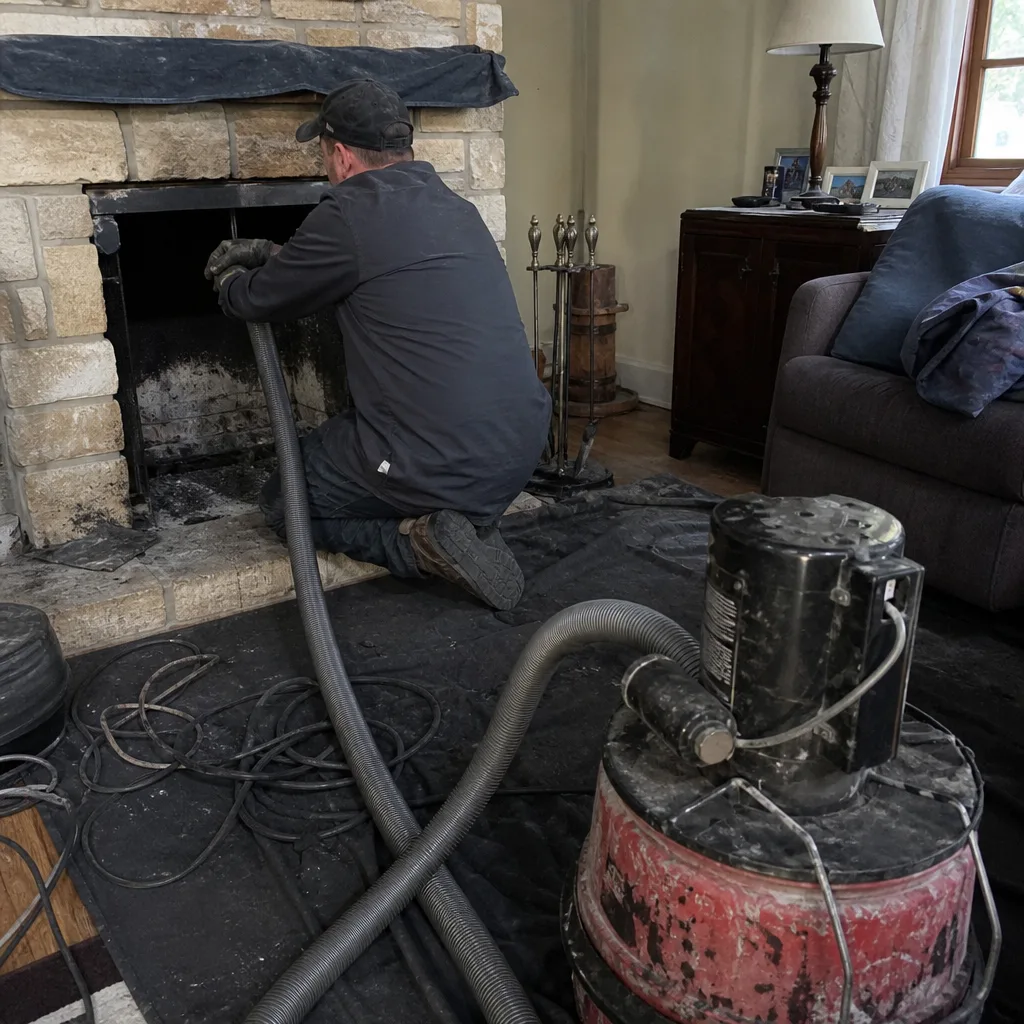 Before
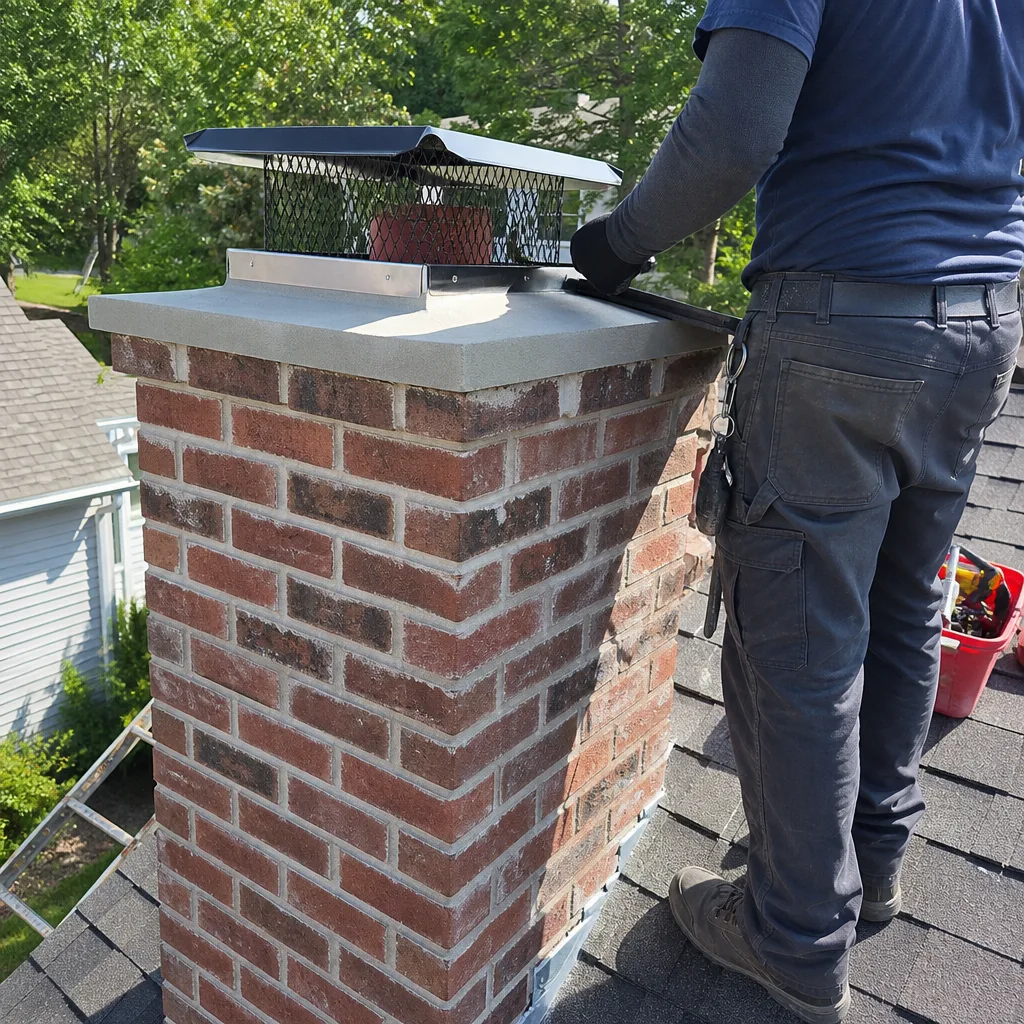 After
AfterSeasonal Chimney Cleaning Care for Stamford: Year-Round Homeowner’s Guide
Most Stamford homeowners schedule a chimney cleaning in October, right before the first fire of the season. By then, it’s already too late to fix anything the inspection finds without choosing between a cold house and an unsafe fire. The chimney doesn’t care about your calendar. It responds to temperature swings, humidity from Long Island Sound, and how many cords of wood you burned last winter. This guide breaks the year into four distinct chimney risk windows for Stamford specifically, and tells you exactly what to do in each one-drawing on our Chimney Cleaning & Sweep Maintenance Checklist for Stamford Homeowners-so you’re never caught finding problems when you have no time to solve them.
Quick Answer
Seasonal chimney maintenance in Stamford works best in four windows: inspect and repair in August-September (before the rush), verify three safety checks before first fire in October-November, monitor draft and odor weekly during heavy use in December-February, and document the season’s deposits in March-April before spring cleaning. Coastal humidity from Long Island Sound accelerates mortar and metal corrosion between seasons, so a fall-only schedule leaves problems sitting for months.
Table of Contents
- August-September: The Off-Season Inspection Window
- October-November: The Three Checks Before First Fire
- December-February: Monitoring During Heavy Use
- March-April: Post-Season Documentation
- Why Stamford’s Coastal Humidity Changes Everything
- What Creosote Actually Does Between Seasons
- Common Mistakes to Avoid
- When to Call a Professional
- Frequently Asked Questions
- The Bottom Line
BeforeAfterAugust-September: The Off-Season Inspection Window
August is the most important month on the Stamford chimney calendar, and almost nobody uses it. The logic is simple: whatever an inspection finds in August, you have six to ten weeks to repair before the first cold snap forces you to light a fire. The same inspection in late October finds the same problems, but now you’re choosing between burning anyway or paying emergency rates in November. We’ve seen this pattern every year since 2009. The homeowners who call us in September get repairs done calmly, with written prices and no pressure. The ones who call in November are calling because smoke is backing up into the living room.
Summer heat does something specific to creosote that makes August inspection uniquely valuable. Creosote is the condensed residue from wood smoke, and it deposits inside your flue as a tar-like substance. During July and August, the flue liner gets hot, sometimes 120 degrees or more on a sunny day. That heat softens Class III creosote, the hardened, glassy stage, and makes it more detectable on camera than it would be in cooler weather. In our experience inspecting Stamford chimneys in late summer, we find deposits that were less visible during the previous spring’s cleaning. The heat drives moisture out of the flue, revealing cracks and separations in clay tile liners that cold-weather inspections can miss.
Beyond what the heat exposes, August-September is when reputable chimney companies in Stamford have open schedules. You can get an appointment in days, not weeks. That’s not a convenience point. It means the technician has time to do a Chimney Cleaning & Sweep in Stamford without rushing, write a full scope, and give you a written price before any work starts. Clause 1 of the Haven Standard requires exactly that: written price, written scope, written warranty, delivered before anyone touches your chimney. You can read it at your kitchen table, not standing in front of a tech who’s already set up his ladder.
What to do in August-September:
- Book a Level 2 inspection. NFPA 211 Level 2 means a camera goes down the flue, not a flashlight pointed up from the firebox. Every inspection at Level Two Chimney Stamford includes camera-scan documentation and a photo record, a practice we’ve maintained continuously since 2009 under Haven Standard Clause 4.
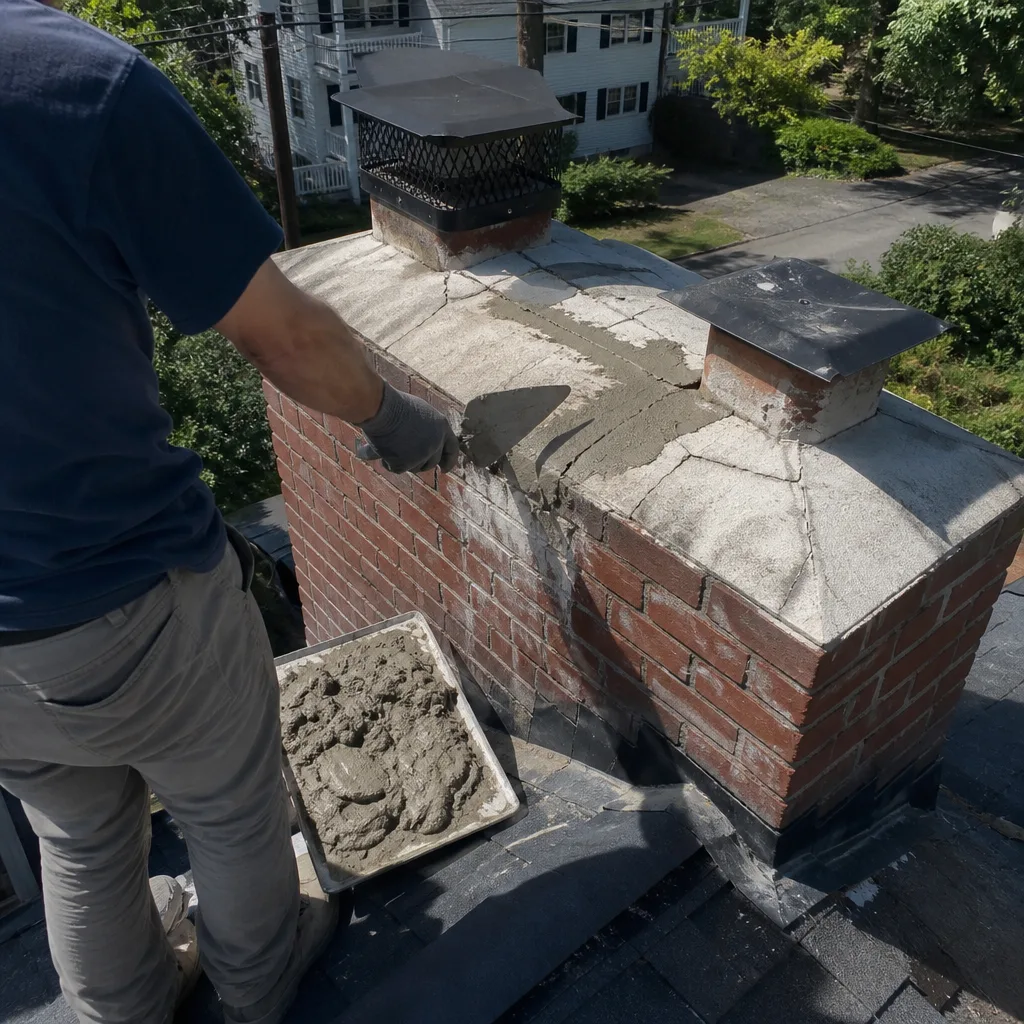
- Check the exterior masonry. Walk around your house and look at the chimney from the ground. Stamford’s freeze-thaw cycle, especially in neighborhoods like Shippan and North Stamford where older brick chimneys are common, causes spalling (the brick face flaking off) that gets worse every winter. See Chimney Repair in Stamford for what spalling looks like and what it costs to fix before it becomes structural.
- Test the damper. Open and close it fully. If it sticks, rusts, or won’t seat completely, replace it now. A damper that won’t close after the season leaks heated air all winter and keeps costing you money until spring.
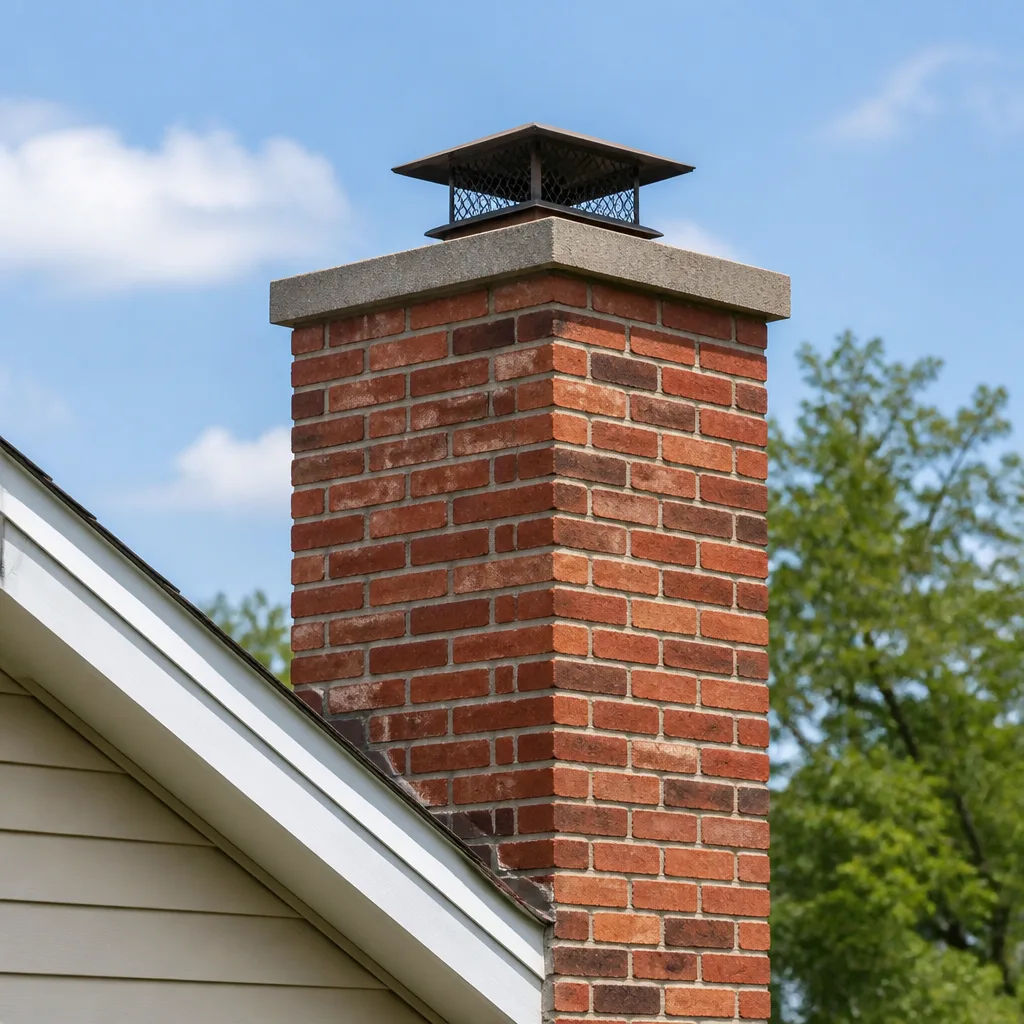
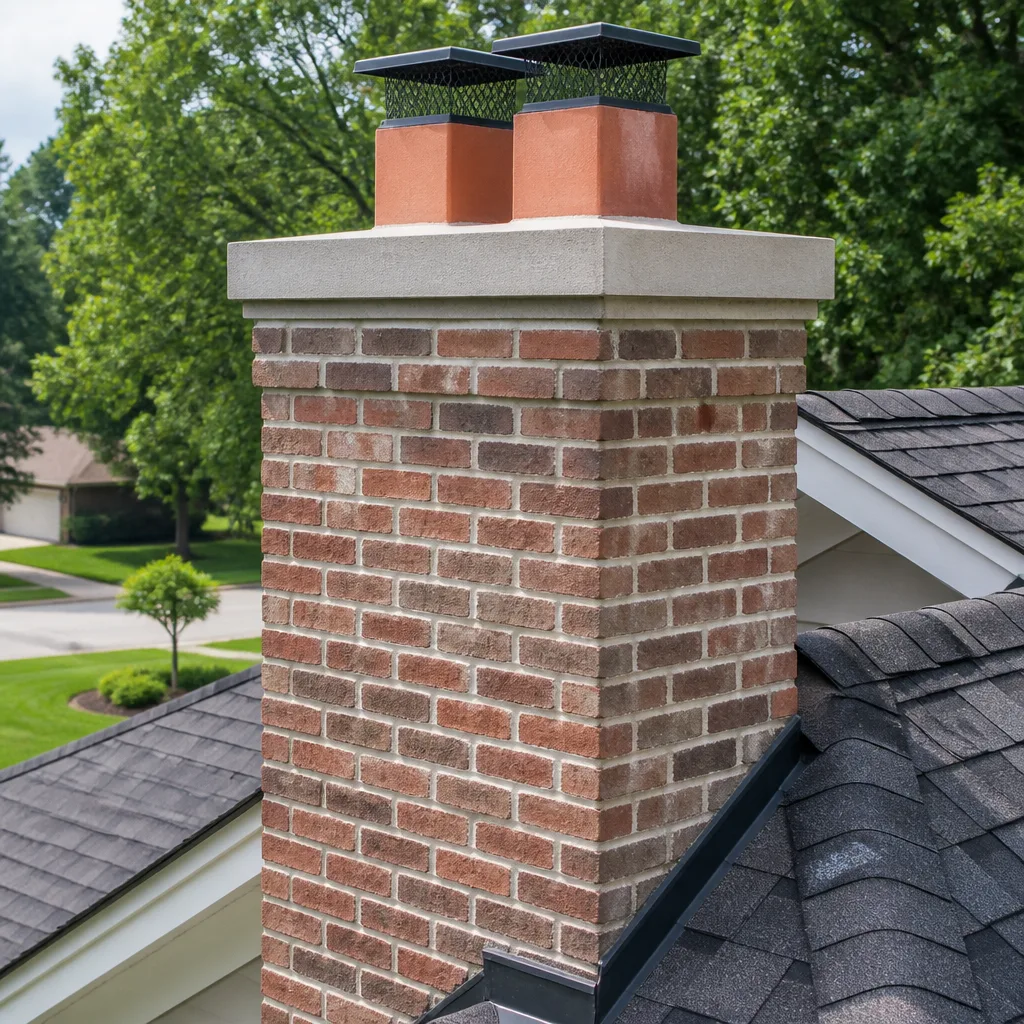
- Verify the cap. The chimney cap is your first defense against rain, squirrels, and the coastal wind-driven rain that Stamford gets from Long Island Sound. A missing or damaged cap in August means water has already been getting into your flue all summer.
One more thing about timing. Insurance claims for chimney fires spike in December and January in Fairfield County. When the claim is filed, the adjuster asks when the chimney was last inspected. “August” is a much better answer than “last year sometime.” That’s not about avoiding claims. It’s about having documentation when you need it, and that documentation-along with understanding Chimney Cleaning Permits, Codes & Inspections in CT: What You Need to Know-starts with the right timing.
October-November: The Three Checks Before First Fire
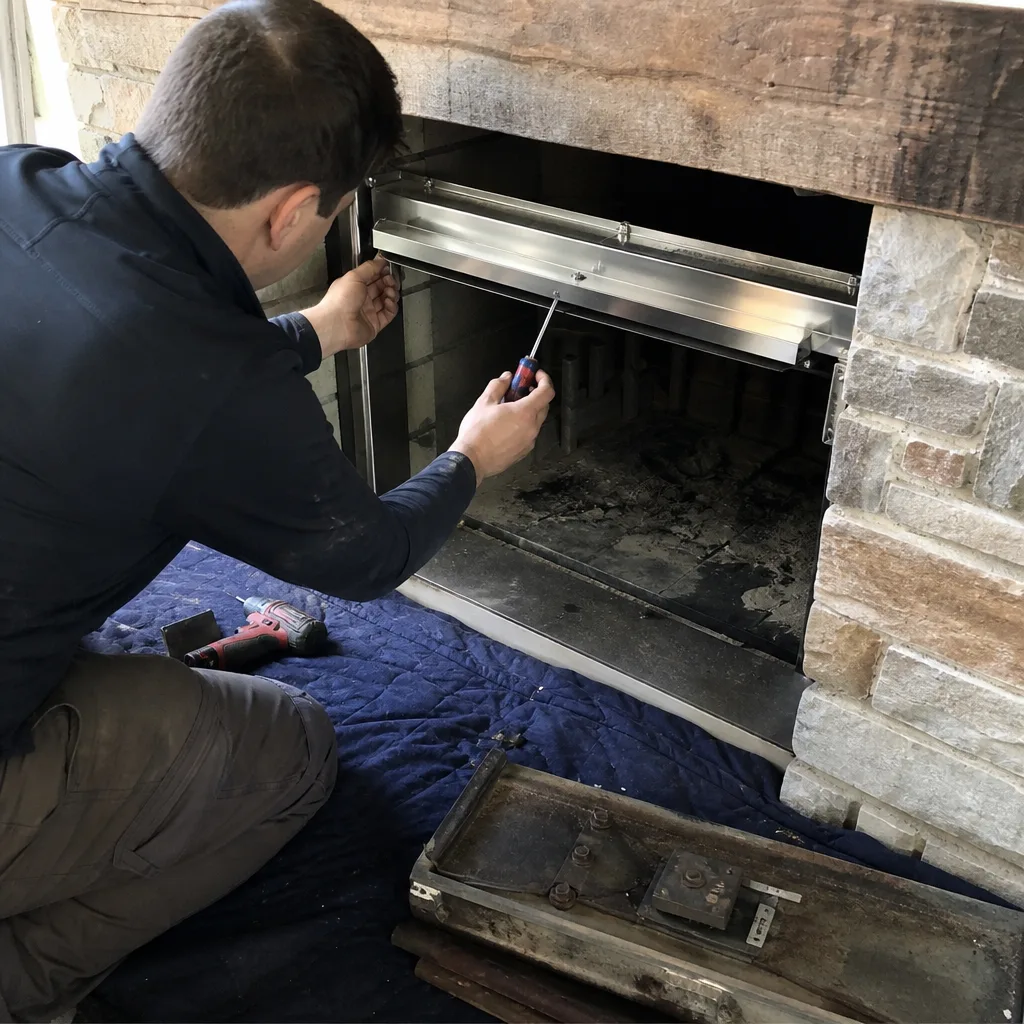
If you did the August inspection, October is a verification month, not a discovery month. You’re confirming that nothing changed between September and first burn, and you’re doing three specific checks that take about 20 minutes total. If you skipped the August window, October becomes an inspection month by default, and you accept the risk that you’ll find something you can’t fix before Thanksgiving.
Before the first fire of the season in Stamford, verify these three things:
- The flue is clear. Put a bright flashlight in the firebox and look up. You should see the flue liner, not a wall of creosote or a birds nest. If you can’t see past the first bend, the flue is blocked or heavily coated. Don’t burn. Call a Fireplace Services in Stamford sweep to camera the flue before you light anything.
- The damper opens fully and stays open. A damper that slips closed mid-fire sends smoke and carbon monoxide into the house. This is not a nuisance issue. It’s a safety issue. If the damper won’t hold open, replace the mechanism before burning season starts, not during.
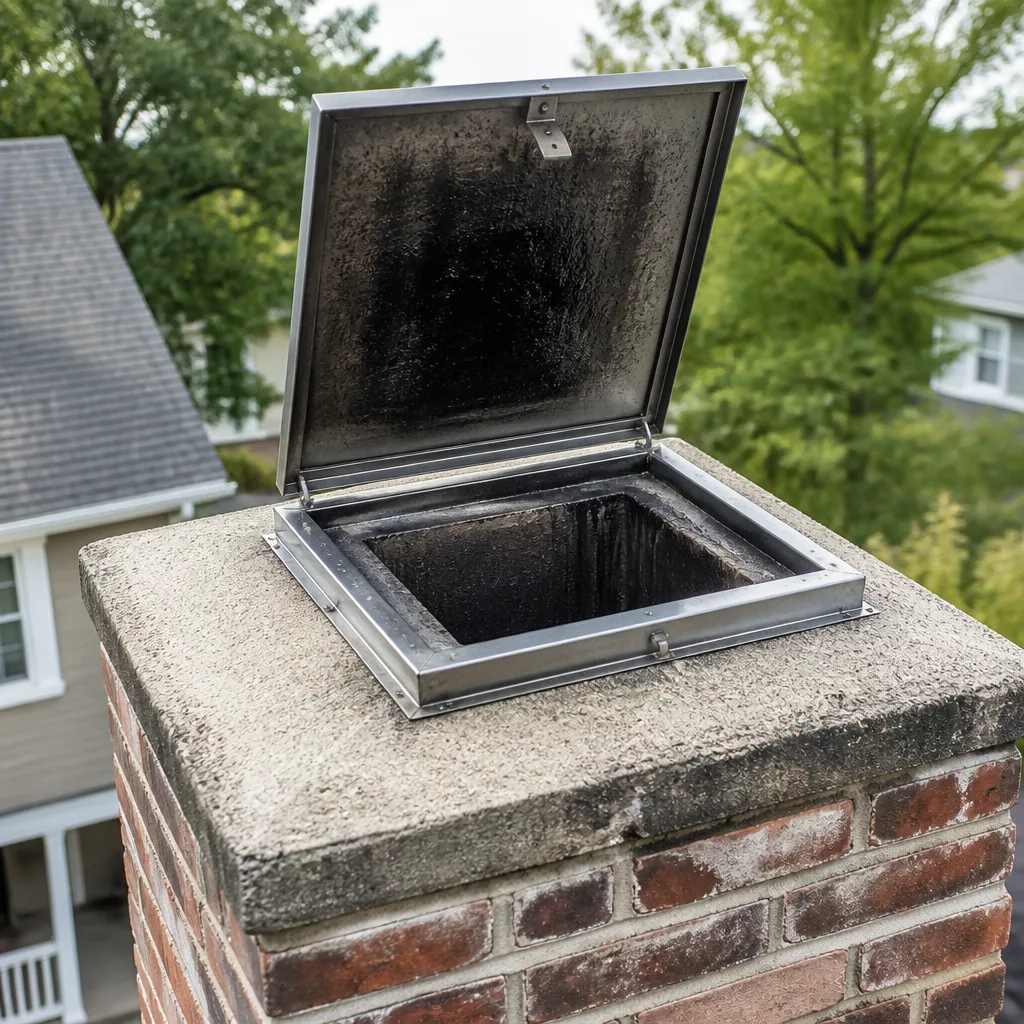
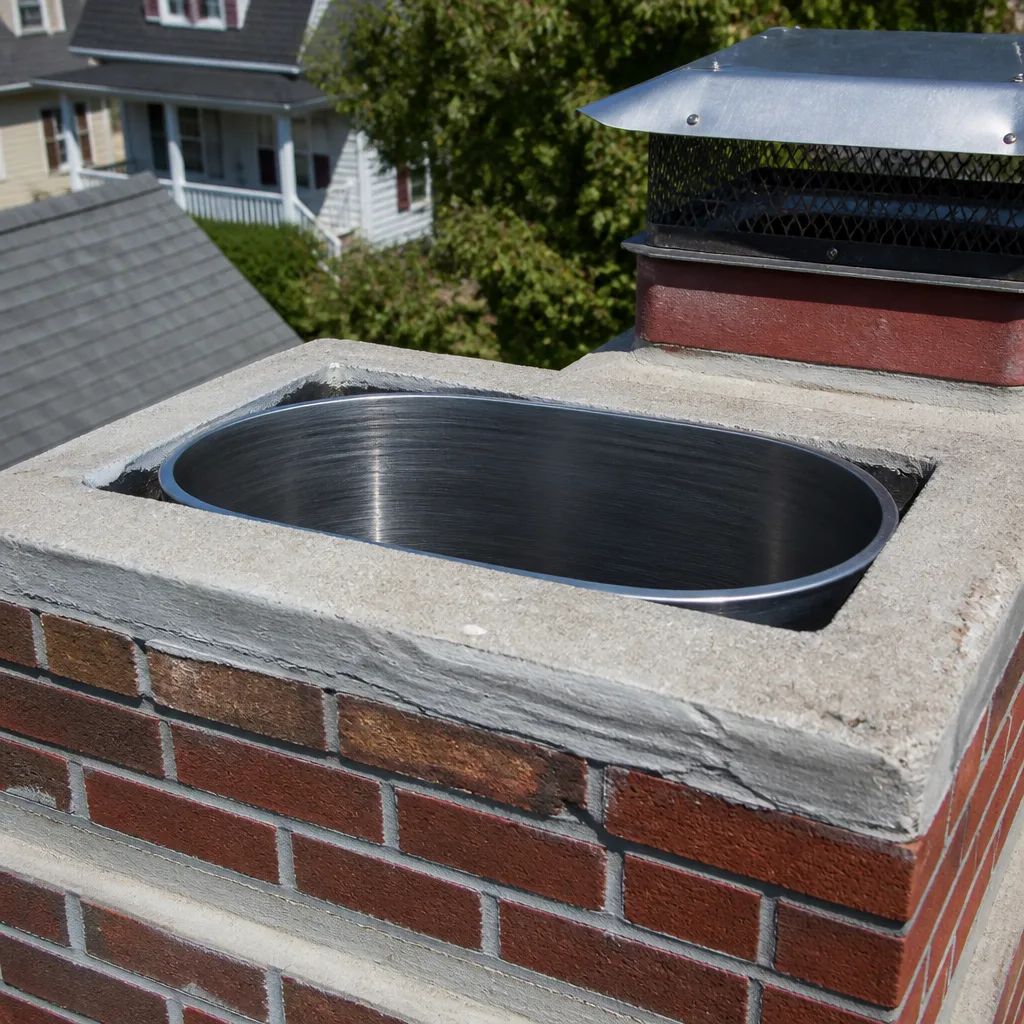
- The cap and crown are intact. Go outside and look up. The crown is the concrete slab on top of the chimney that sheds water, and the cap sits above the flue opening. Cracks in the crown let water into the brick, and Stamford’s winter freeze-thaw turns small cracks into broken masonry within one season. A damaged cap means rain and snow enter the flue directly, mixing with creosote to form an acidic slurry that corrodes mortar and metal liners.
One pattern we see every October in Stamford: a homeowner calls us because they lit their first fire and the smoke spilled into the room instead of drawing up the flue. Nine times out of ten, the chimney is cold and the house is tightly sealed. The stack effect, the pressure difference that drives draft, hasn’t built up yet, and the fireplace is competing with a running furnace for the same air. The fix is usually simple: open a window an inch for the first five minutes of the fire, preheat the flue with a rolled newspaper held near the damper, and try again. If draft doesn’t improve after that, the problem is structural, not atmospheric, and the flue needs a camera inspection.
For homeowners who burn wood pellets or compressed logs instead of cordwood, the October checklist is shorter but not optional. Pellet stoves produce less creosote by weight than cordwood, but the creosote they do produce is finer and more acidic, and it adheres to the vent pipe more aggressively. Stamford’s coastal humidity makes this worse in fall, when overnight condensation adds moisture to the vent system. Inspect the vent pipe connections for gaps and hairline cracks. Pellet exhaust has more carbon monoxide potential than many homeowners realize, and a loose joint is a venting failure waiting for the first cold week.
December-February: Monitoring During Heavy Use
The burning season in Stamford runs from roughly Thanksgiving to early March, and the chimney talks to you the entire time if you know what to listen for. Most chimney problems announce themselves as changes in behavior, not as dramatic failures. A homeowner who burns three nights a week and pays attention to draft, odor, and smoke color catches problems in January that become expensive repairs by March.
Three signals to monitor weekly during heavy-use months:
- Draft changes. If a fireplace that drew strongly in December suddenly needs a window cracked open in February to keep smoke moving up instead of out, the flue is partially obstructed. The deposit is building, and it’s changing the flue’s effective diameter. That’s a cleaning call, not a technique adjustment.
- Odor changes. A smoky smell in the house during the summer is classic creosote off-gassing from heat and humidity. But a sharp, acrid smell during burning season, especially one that appears in rooms far from the fireplace, can mean the flue liner has cracked and exhaust is seeping into wall cavities. This is the most serious symptom on this list, and it deserves an immediate Level 2 camera inspection rather than a wait-and-see approach.
- Smoke color and behavior. White or light gray smoke is normal for a well-drafted wood fire. Dense, dark smoke that lingers at the chimney top means incomplete combustion, either from wet wood, insufficient air supply, or a partially clogged flue. Green or yellow-tinted smoke is a chemical red flag and means stop burning immediately and call for an inspection.
Mid-winter is also when Stamford’s older chimneys fail at the crown or cap. The mechanism is mechanical, not chemical: snow loads on the crown, overnight temperatures drop below freezing, and the moisture that seeped into small cracks in October expands as ice and splits the masonry. By February, a crown that looked fine in September has a visible crack running across it. From the ground, look for white efflorescence staining on the brick below the crown. That white powder is dissolved mineral salts carried by water, and it means water has been moving through the masonry for weeks. Treat it as evidence of a crown or flashing problem, not as a cosmetic issue.
If we’re called to a mid-season chimney problem in Stamford, we open with the camera. The homeowner gets to see what we see, on the spot, and we explain it in plain terms before quoting anything. That practice, a camera-scan inspection on every visit with a documented photo record, has been our standard since 2009 and is written into Clause 4 of the Haven Standard. You never take our word for a liner condition or creosote class. You see the footage.
March-April: Post-Season Documentation
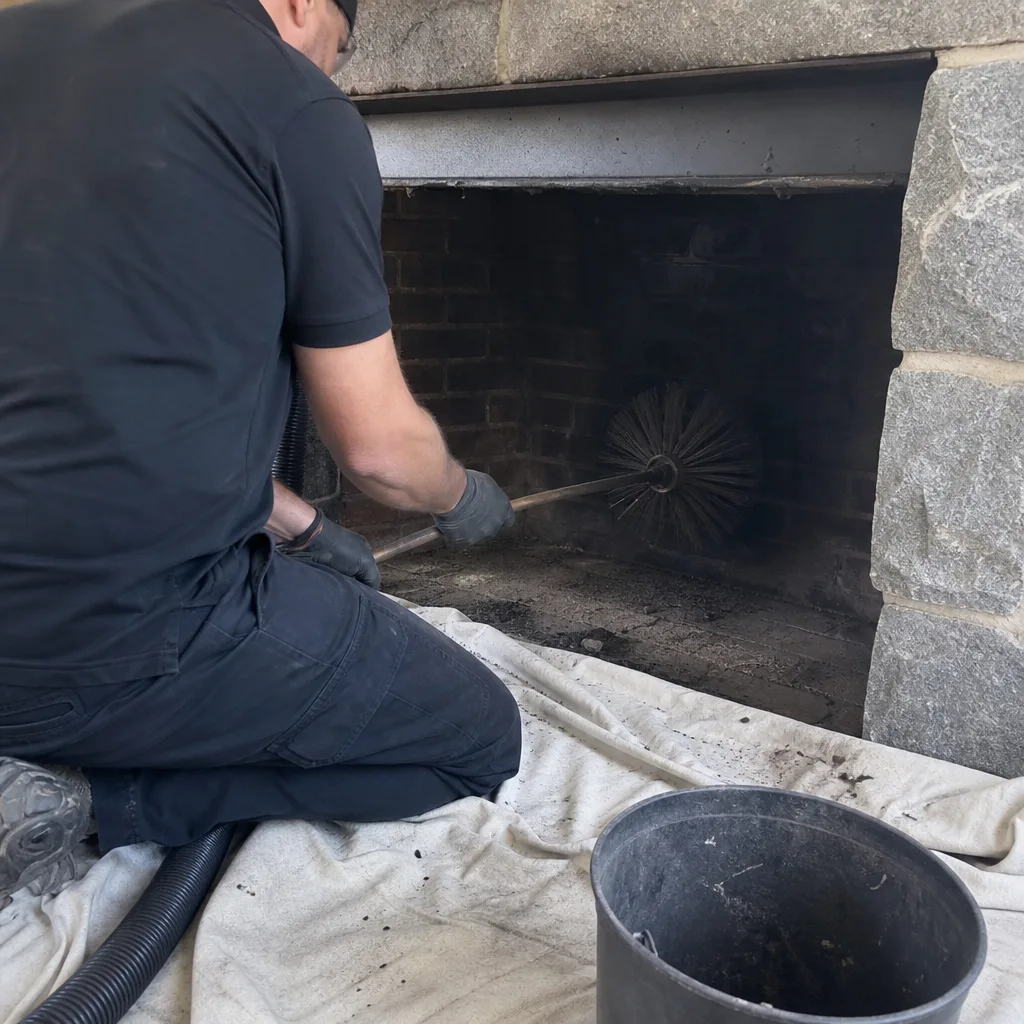
March is the documentation window, and it’s the most neglected step in the entire seasonal cycle. Here’s why it matters: whatever your chimney looks like after a winter of burning is a data point that affects insurance claims, resale disclosures, and your own decision about whether the flue needs relining. If you clean it in April without documenting the before condition, you lose that data forever.
The post-season sweep should include a camera scan of the flue before the brushes go down. The technician is looking for specific things: where creosote accumulated most heavily (usually the top third of the flue, where exhaust cools fastest), whether last year’s clay tiles have new hairline cracks, whether the smoke chamber walls show fresh deterioration, and whether the crown has shifted since the previous inspection. In Stamford’s climate, the shifts are often measurable year over year. A crown that lifted an eighth of an inch on the north-facing side one year will lift another eighth the next until water intrusion becomes constant.
Documentation is where our process differs from a traditional sweep. Every visit at Level Two Chimney Stamford ends with a photo record: images of the flue before cleaning, after cleaning, the crown, the cap, the firebox, and the smoke chamber. That record is yours. Whether you’re selling the house next year, filing a claim, or just maintaining an archive, you have a documented history that most Stamford homeowners don’t. Under Haven Standard Clause 4, that photo record is included on every job, not sold as an add-on.
Spring is also the right time to address what the winter revealed. If February monitoring showed draft deterioration, the April sweep quantifies the deposit and tells you whether next year will be worse, not better. If the liner showed early-stage cracking, you have eight months to plan a relining rather than twelve weeks. Materials matter here. We source liners and components from manufacturers including Olympia Chimney and Copperfield through Haven’s buying network, which keeps pricing honest, and we quote you a written price before ordering anything. See our Level Two Chimney Stamford home page for the full range of what spring inspections cover.
Why Stamford’s Coastal Humidity Changes Everything
Stamford sits on Long Island Sound, and the Sound is a humidity engine. From April through October, the air carries more moisture than inland Connecticut by a significant margin, and that moisture enters your chimney whether you burn or not. The chimney is a vertical column open to the sky. It breathes in humid air, and that humid air condenses on the cooler flue walls, especially overnight when temperatures drop.
The chemistry is straightforward: wood smoke produces creosote, which is acidic. Humid air condenses inside the flue, combining with creosote deposits to form a corrosive slurry that attacks mortar joints, clay tile liners, and metal dampers. Mortar is the most vulnerable material. It’s porous, and once the acid penetrates the surface, it breaks down the lime binder that holds the mortar together. Stamford chimneys that would have 30 years of mortar life in a dry climate lose it in 20 to 25 years because of the Sound’s humidity. Neighborhoods closest to the water, Shippan, Cove, East Side, see the effect most clearly, and we see it in the condition reports: more efflorescence, faster spalling, earlier crown failure than inland chimneys of the same age.
Metal is affected too. Galvanized steel caps corrode faster in salt-adjacent air, and stainless steel liners, while corrosion-resistant, still benefit from annual inspection of their joints and connections. The cap’s fasteners and the damper’s pivot points are the first things to seize in a humid environment. An annual fall inspection that checks the cap and damper as moving parts, not as static fixtures, catches that before first fire.
Gelco and Famco manufacture chimney caps and dampers that hold up well in coastal environments, and we specify them for Stamford homes where the salt air proximity is a known factor. The right component choice, made once, extends the life of the cap and the flue behind it. That’s the practical side of what coastal humidity means: not fear, just material selection and inspection frequency shifted to match the climate.
What Creosote Actually Does Between Seasons
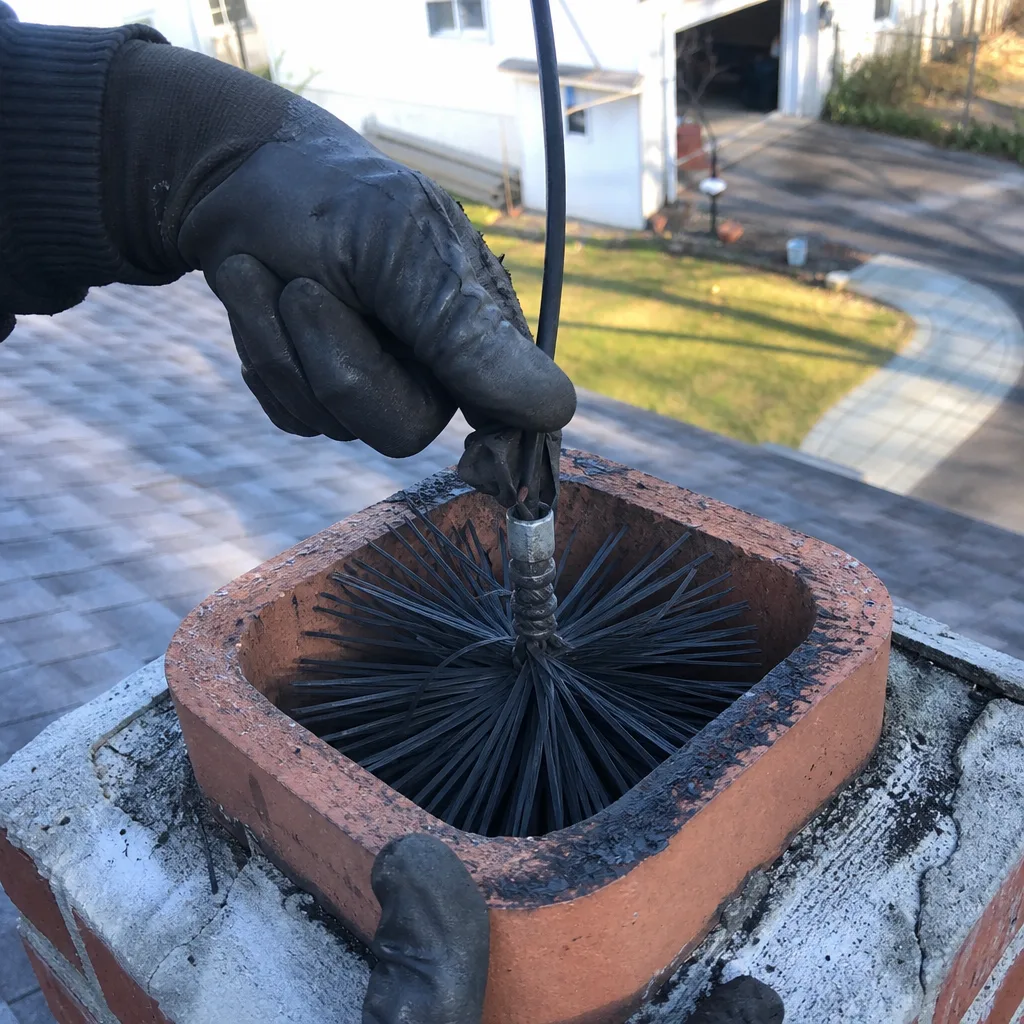
Most homeowners think of creosote as a static deposit, something that sits inside the flue until it’s brushed away. The chemistry is more active than that. Creosote goes through three stages, and the stage determines what it does to your chimney in each season.
Class I creosote is light, dusty, and brushes away easily. It forms during hot, well-drafted fires and is the least concerning stage. Class II is flaky and granular, like coffee grounds pressed into the flue walls. It’s more tenacious and requires mechanical brushing to remove. Class III is the dangerous stage: dense, hardened, glossy, and sometimes called glazed creosote. It forms when creosote tar is re-heated by hot fires, driving off the moisture and leaving a carbonized glaze. Class III creosote is fuel. It ignites at around 2,000 degrees Fahrenheit, which is well within the range of a chimney fire, and it’s the stage most often present in Stamford flues that burn through four to five cords of wood per winter.
Between seasons, creosote’s behavior depends on humidity and temperature. During Stamford’s humid summer, Class II creosote absorbs moisture from the air and expands slightly, then contracts when the air dries. This expansion-contraction cycle weakens its bond with the flue lining, which can sound alarming, but it actually makes brushing easier in the fall. The real problem is with Class III. In summer heat, the glaze softens just enough to migrate into small cracks in clay tiles, and when winter comes and the tile contracts, the glaze has hardened inside the fissure and widens it. This is the slow mechanism by which a hairline crack in a clay liner becomes a separation over several seasons. An August camera inspection sees it early. A November one sees it when it’s already structural.
Stamford never gets hot enough to melt Class III creosote into a flowing liquid, but the repeated softening and hardening over 90-degree summer days is enough to make deposits shift. That’s why we inspect off-season. The peak season is for cleaning and verification, not discovery.
Common Mistakes to Avoid
- Burning pine in an open fireplace because it’s cheap. Pine burns hot and fast, but it produces disproportionate creosote by weight because of its resin content. In Stamford’s humid climate, resinous creosote combines with moisture more readily, accelerating the acidic corrosion cycle. Burn seasoned hardwood, and if you must burn pine, mix it with hardwood and inspect more frequently.
- Closing the damper immediately after the fire dies. Embers continue to off-gas for hours after the visible flame is gone. Closing the damper too early traps those gases in the flue, where they cool and condense as Class II creosote. Wait at least 30 minutes after the last visible ember before closing, longer if the fire burned wet wood.
- Assuming a gas fireplace needs no maintenance. Gas fireplaces produce water vapor and acidic byproducts that corrode metal venting over time. The vent pipe on a gas insert needs annual inspection for corrosion, separation, and blockages, especially with Stamford’s salt-adjacent air accelerating the metal degradation.
- Painting over efflorescence instead of solving the water problem. White staining on the chimney means water is moving through the masonry. Painting seals the moisture inside, which accelerates spalling in Stamford’s freeze-thaw winters. Fix the crown or flashing first, then address the cosmetic issue.
- Skipping the cap because “the chimney has lasted this long.” Older Stamford chimneys were built before caps were universal, and many have never had one. The cap is a $100 to $300 component that prevents thousands in water damage. Rain enters uncapped flues all summer and mixes with creosote, creating the acidic slurry that eats mortar from the inside out.
- Booking a sweep in October as the entire seasonal plan. If your only chimney maintenance is one October cleaning, you find problems at the worst possible time and ignore them for twelve months. The August inspection window and March documentation window are what transform maintenance from reactive to planned.
- Ignoring a chimney that “we don’t use.” An unused chimney still breathes humid air, still absorbs water through cracks, and still deteriorates. The question is whether you’re watching it deteriorate or discovering it during a home inspection before you sell. A one-visit inspection every two to three years on an unused chimney costs less than a surprise repair at resale.
When to Call a Professional
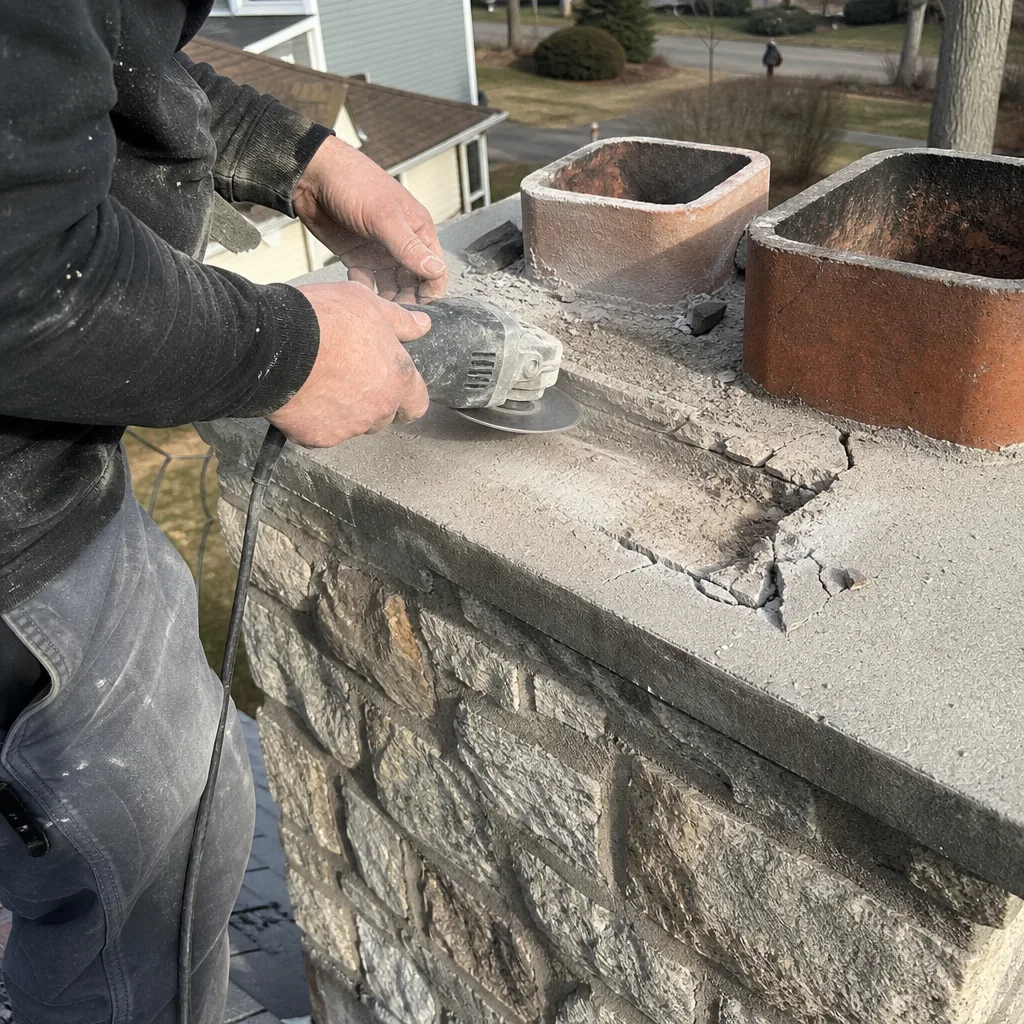
Call a professional when you see any of these: smoke backing into the house despite an open damper and cracked window, an acrid indoor odor that appears during burning season, green or yellow-tinted smoke at the chimney top, a visible crack in the crown from the ground, efflorescence spreading up the brick, or a flue inspection that shows deposits you can’t see past with a flashlight. These are structural and safety signals, not maintenance suggestions. The same applies to any gas or pellet venting system that shows corrosion, separation, or unusual exhaust. Level Two Chimney Stamford offers free estimates in Stamford, with a camera-scan inspection and a written price before any work begins. Call (914) 537-8463.
Frequently Asked Questions
A chimney that burns more than one cord of wood per season in Stamford should be swept annually, and the National Fire Protection Association recommends sweeping any chimney when creosote accumulation reaches 1/8 inch regardless of time. Coastal humidity in Fairfield County accelerates mortar and metal degradation between seasons, so an annual inspection paired with the sweep is the minimum standard for active chimneys. Call (914) 537-8463 to schedule a sweep with camera documentation included.
A standard chimney sweep in Stamford typically costs between $180 and $340, depending on flue height, creosote stage, and whether a Level 2 camera inspection is included. For a deeper dive into pricing factors, see our Chimney Cleaning Cost Breakdown: The Stamford Homeowner’s Reference for 2026. Additional services like cap replacement, crown repair, or liner relining are quoted separately in writing before work begins. Level Two Chimney Stamford writes the price on the page, not after the tech is in your home, and a free second opinion on any competitor’s written estimate is always available.
You need a new liner when cracks compromise the flue’s ability to contain heat and exhaust, not when a single hairline appears in an unused flue. A Level 2 camera inspection shows the type, location, and depth of the cracks, and that evidence is what determines whether relining is urgent or can wait. Homeowners in Stamford should verify liner condition annually in humid areas near the Sound, where acidic creosote slurry accelerates corrosion of older clay liners.
Creosote accumulates, humidity from Long Island Sound combines with the deposits to corrode mortar and metal, and the flue’s draft capacity decreases until smoke backs up into the living space or a chimney fire starts. Insurance adjusters in Fairfield County typically ask when the chimney was last inspected when a fire claim is filed, and an undocumented furnace vent is harder to defend than one with a camera-scan record. Annual maintenance prevents the failure mode from developing at all.
August is the best time because the summer heat has softened creosote deposits, making cracks and separations in clay tile liners more visible to camera, and because the repair window before first burn is six to ten weeks instead of days. Stamford homeowners who inspect in August can schedule repairs at normal rates, while October inspections often force a choice between burning unsafe or paying emergency rates. The prepaid appointment model means you can book now and inspect in August without fighting the fall rush.
You should receive a written scope of work, a written price, a written warranty, and a documented photo record of the flue before and after cleaning, the crown, cap, firebox, and smoke chamber. Level Two Chimney Stamford has included a camera-scan inspection and photo record on every visit since 2009 under Haven Standard Clause 4, and that documentation belongs to you for insurance, resale, or future inspection comparison.
The Bottom Line
Stamford’s chimney risks follow the seasons, not the calendar, and the homeowner who plans around those seasons avoids the worst-case scenario: finding problems in November with no time to fix them. The August inspection window is the most important and least used opportunity in the cycle, and the March documentation sweep preserves a record that pays out for years. Coastal humidity is the multiplier that accelerates every failure mode in Fairfield County chimneys, which is why annual inspection here is a different calculation than it is inland. Document, verify, monitor, and document again. That’s the whole system.
Written by Corrine Halstead, Owner at Level Two Chimney Stamford, serving Stamford since 2009.